
Female genital mutilation (FGM) is one of the most serious public health and human rights issues in Somalia today. It is deeply tied to tradition, culture, and social expectations, but it has devastating consequences for women and girls. Despite years of advocacy, Somalia continues to have one of the highest rates of FGM in the world, with surveys showing that over 98% of Somali women aged 15–49 have undergone some form of the practice.
In this article, we’ll take a close look at why FGM is so widespread in Somalia, what forms it takes, how it affects women, and what is being done to end it. The goal is not just to present facts, but to provide a human-centered understanding of this issue.
1. Understanding Female Genital Mutilation

FGM refers to procedures that involve the partial or total removal of external female genitalia, or other injuries to the female genital organs, for non-medical reasons. It is internationally recognized as a violation of human rights and has no health benefits whatsoever.
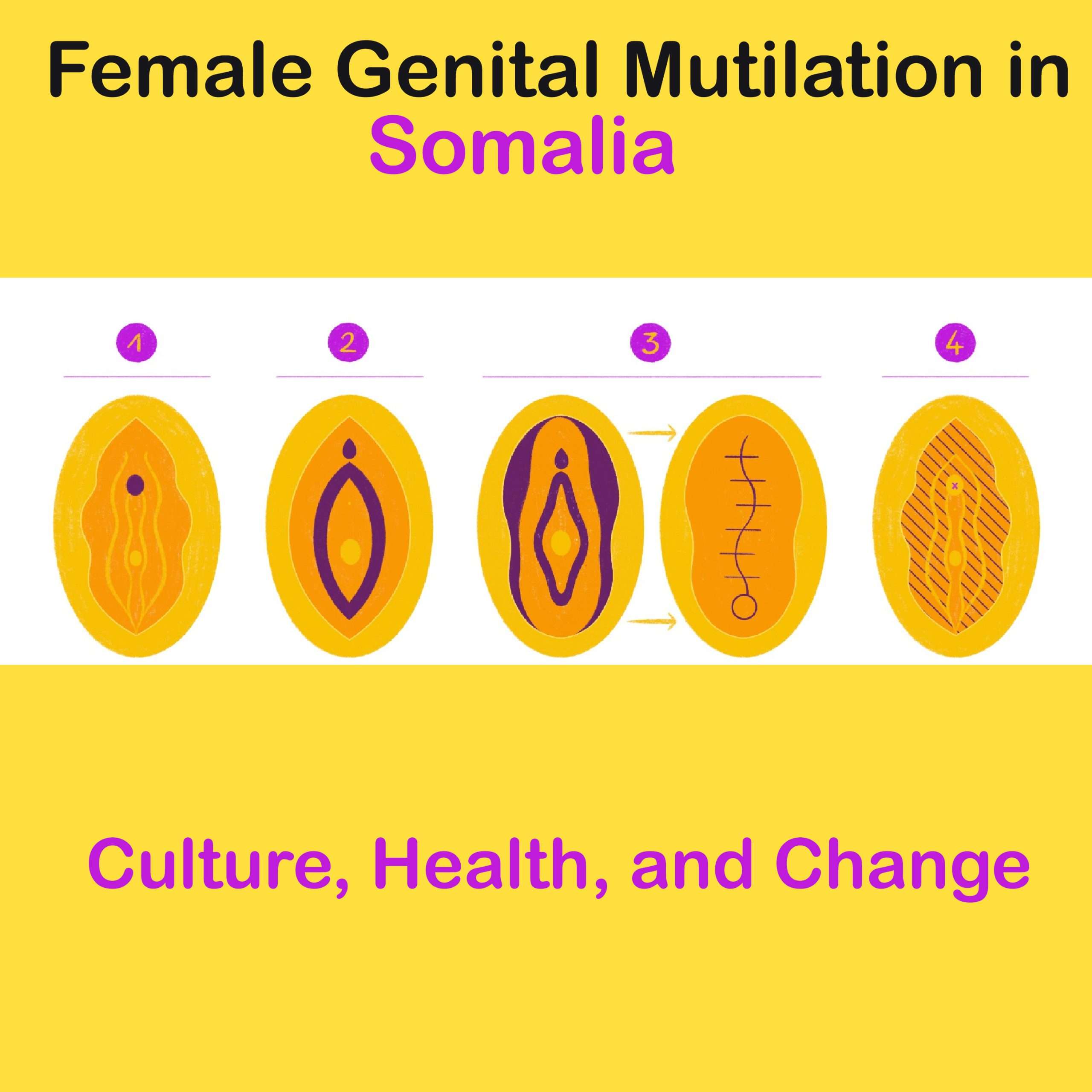
The World Health Organization (WHO) classifies FGM into four main types:
- Type I (Clitoridectomy): Partial or total removal of the clitoris.
- Type II (Excision): Removal of the clitoris and the inner labia, sometimes outer labia as well.
- Type III (Infibulation): The most severe, involving removal and stitching of the genital area, leaving a small opening for urine and menstruation.
- Type IV: Other harmful procedures such as pricking, piercing, or cauterizing.
In Somalia, Type III (infibulation) is the most common. This is sometimes referred to as “pharaonic circumcision” and is the most extreme form, often performed on girls between the ages of 5 and 11.
2. Why FGM is Practiced in Somalia

FGM in Somalia is not just a medical act—it’s tied to culture, religion, and social expectations.
Some of the common reasons people give for continuing the practice include:
- Cultural Tradition: Many see it as part of Somali heritage passed down through generations.
- Marriageability: A girl who has not undergone FGM is often considered “impure” or unsuitable for marriage.
- Religious Beliefs: Though FGM is not prescribed by Islam, some Somalis believe it is required by religion.
- Control of Sexuality: Families fear that if girls are not cut, they may be “too sexually active” before marriage.
In reality, these reasons are rooted more in social pressure than in faith. Islamic scholars across the world, including in Somalia, have repeatedly clarified that FGM has no basis in Islam.
3. The Scale of the Problem
The scale of FGM in Somalia is staggering. According to UNICEF and UNFPA, around 98% of Somali women aged 15–49 have undergone FGM—the highest prevalence in the world.
The practice is nearly universal across both rural and urban areas. It cuts across economic and educational divides, meaning wealthy families are just as likely to have their daughters cut as poorer ones.
However, one small but important trend is emerging: younger Somali women are more likely to have undergone less severe forms of FGM (Type I or II) compared to older generations who faced infibulation. This suggests that while the practice is still nearly universal, there is some shift in its severity.
4. Health Consequences of FGM

The medical consequences of FGM are severe, long-lasting, and sometimes life-threatening.
- Immediate health risks: Severe pain, heavy bleeding, shock, infections, and sometimes death.
- Long-term health risks: Chronic pain, recurrent urinary tract infections, menstrual problems, cysts, and infertility.
- Pregnancy complications: FGM is strongly linked to obstructed labor, stillbirth, and the need for cesarean sections.
- Psychological trauma: Many survivors report post-traumatic stress disorder (PTSD), anxiety, depression, and sexual dysfunction.
In Somalia, where healthcare access is already limited, these complications can be devastating. Women in rural areas often give birth at home without skilled attendants, which increases the risks for those who have undergone infibulation.
5. Voices of Somali Women
The most powerful way to understand the impact of FGM is to listen to women who have lived through it.
Some Somali women describe the cutting ceremony as a moment of pride, since it marked them as “clean” in their community. But many also recall it as the most painful and traumatic memory of their childhood.
For married women, the experience often continues into adulthood. Husbands may be unaware of the damage until marriage, and women may suffer through painful intimacy and complications during childbirth.
One Somali activist summarized it simply:
“We are taught that it makes us pure. But no girl feels pure when she is screaming in pain and bleeding.”
6. The Role of Religion
Religion plays a complicated role in FGM in Somalia. Many families believe FGM is a religious obligation, but this is based on cultural misinterpretation.
Islamic scholars across Somalia and the wider Muslim world have clarified that Islam does not require FGM. In fact, leading Somali scholars have publicly opposed the practice.
Despite this, social norms remain powerful. For many families, the fear of being judged by their community outweighs religious clarifications.
7. The Fight Against FGM in Somalia
Somalia has made progress, but the fight is far from over.
- Government Action: In 2012, Somalia adopted a new constitution that bans FGM. However, enforcement remains weak, and there is still no national law with penalties against the practice.
- Community Programs: NGOs and UN agencies run awareness campaigns, working with mothers, religious leaders, and health workers to change perceptions.
- Youth Activism: Young Somali women and men are increasingly speaking out online and in local communities against the practice.
One challenge is that FGM is still seen by many as a private family matter. Changing that mindset requires not only laws, but also cultural shifts.
8. Is Change Possible?
There are reasons for cautious optimism. In neighboring countries like Kenya and Sudan, prevalence rates of FGM have fallen significantly due to education and legal enforcement.
In Somalia, while prevalence is still extremely high, there is evidence of gradual change:
- Younger women are undergoing less severe forms.
- More families are openly questioning the practice.
- Religious leaders are starting to speak more boldly against it.
However, given the near-universal acceptance of FGM in Somalia, change will take time, education, and strong community leadership.
9. What Needs to Be Done Next
For Somalia to reduce FGM rates, several steps are critical:
- Enforce national laws: A clear, enforceable law banning FGM with penalties is needed.
- Empower women: Education for girls and economic opportunities for women reduce reliance on harmful traditions.
- Community-led awareness: Campaigns must include mothers, grandmothers, and religious leaders, since they are the main decision-makers in Somali families.
- Healthcare support: Survivors of FGM need access to medical and psychological care.
10. A Human Rights Issue, Not Just a Health Issue
FGM is not just about health—it’s about human rights. Every Somali girl has the right to grow up without fear of being cut. Every woman deserves autonomy over her body.
Ending FGM in Somalia is not just about statistics; it’s about breaking cycles of pain and giving girls the chance to live healthier, freer lives.
Conclusion
Female genital mutilation in Somalia remains one of the world’s most urgent human rights issues. Despite international condemnation, the practice persists at almost universal levels. But change is possible. Through education, stronger laws, and courageous activism, Somalia can shift away from this harmful tradition.
For the millions of Somali girls growing up today, the hope is that they will be the last generation to endure it.
FAQs About FGM in Somalia
1. What percentage of Somali women have undergone FGM?
Around 98% of Somali women between ages 15 and 49 have undergone FGM—the highest rate in the world.
2. At what age is FGM usually performed in Somalia?
Typically between the ages of 5 and 11.
3. Is FGM required in Islam?
No. Leading Islamic scholars have stated clearly that FGM has no basis in Islam.
4. Does Somalia have laws against FGM?
The 2012 constitution bans FGM, but there is still no specific national law with penalties, and enforcement is weak.
5. What is being done to stop FGM in Somalia?
Efforts include community education, advocacy by NGOs, and growing opposition from religious leaders and youth activists.


